In this activity, I conducted an interdisciplinary learning process that integrated language activities and science education.
First, we went outside with the children to observe the winter sky and the trees. The children carefully observed the color of the sky and the way the trees grow. Then, they arranged long strips of drawing paper from bottom to top, as trees grow.
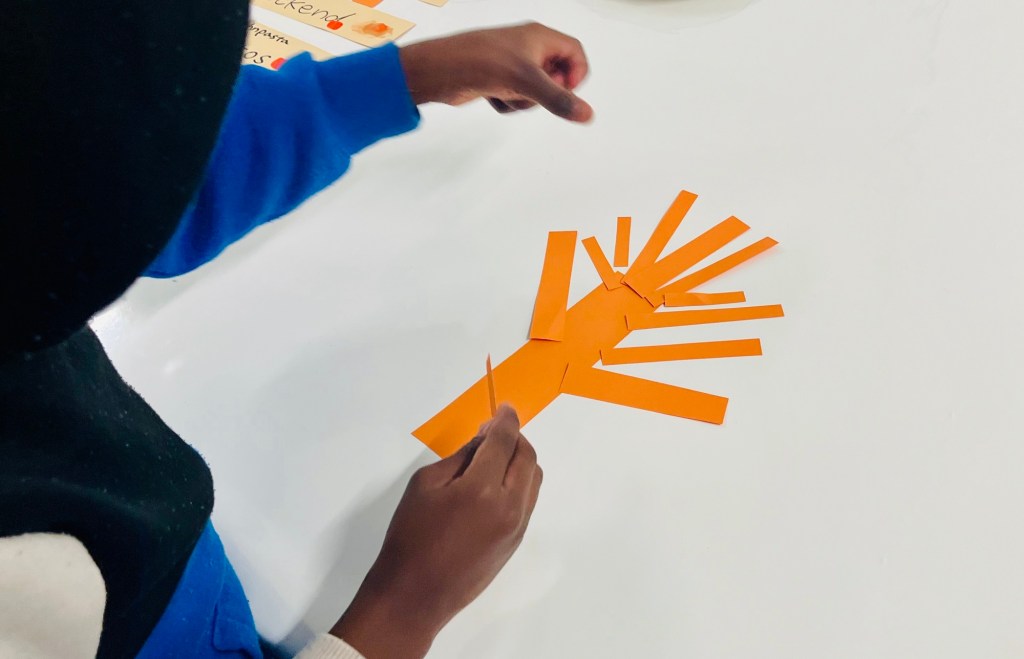
This helped them intuitively understand how trees grow, which also aided in their tree drawing.
Next, under the theme of “Winter Trees,” we considered how snow accumulates when it falls from the snow clouds. We learned that snow does not accumulate on the underside of branches but on top, by moving the paper.
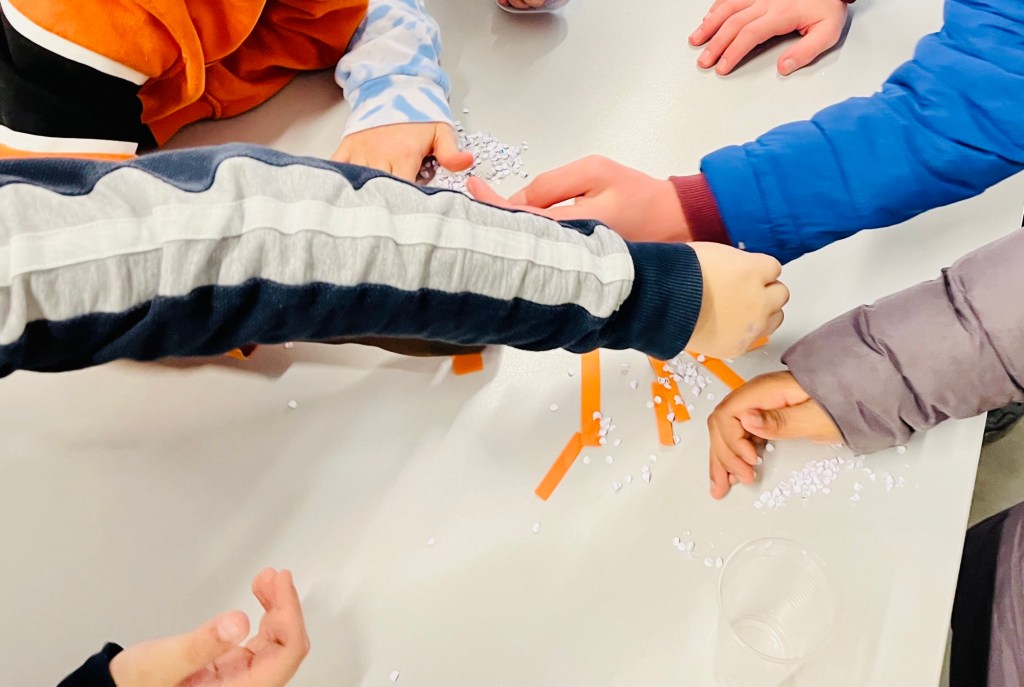
Then, we learned the vocabulary regarding the amount of paint and water to understand the intensity of colors when painting the sky, trees, and snow. The sequence of color intensities from highest to lowest was Deckend(opaque), Pastos(pastose), Durchscheinend(translucent) and Transparent(transparent) in german language.

*But I should have prepared the papers labeled “Wenig Wasser (Little Water)” and “viel Wasser (A Lot of Water)” in different colors.
By learning the words that express color intensity, we improved our skills in the visual arts.
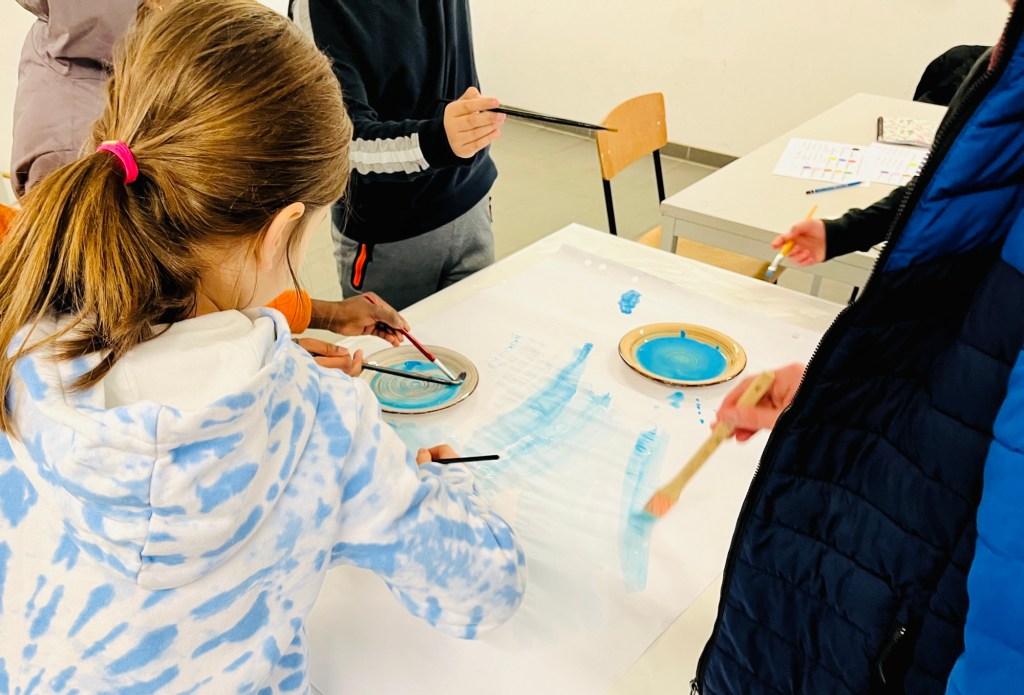
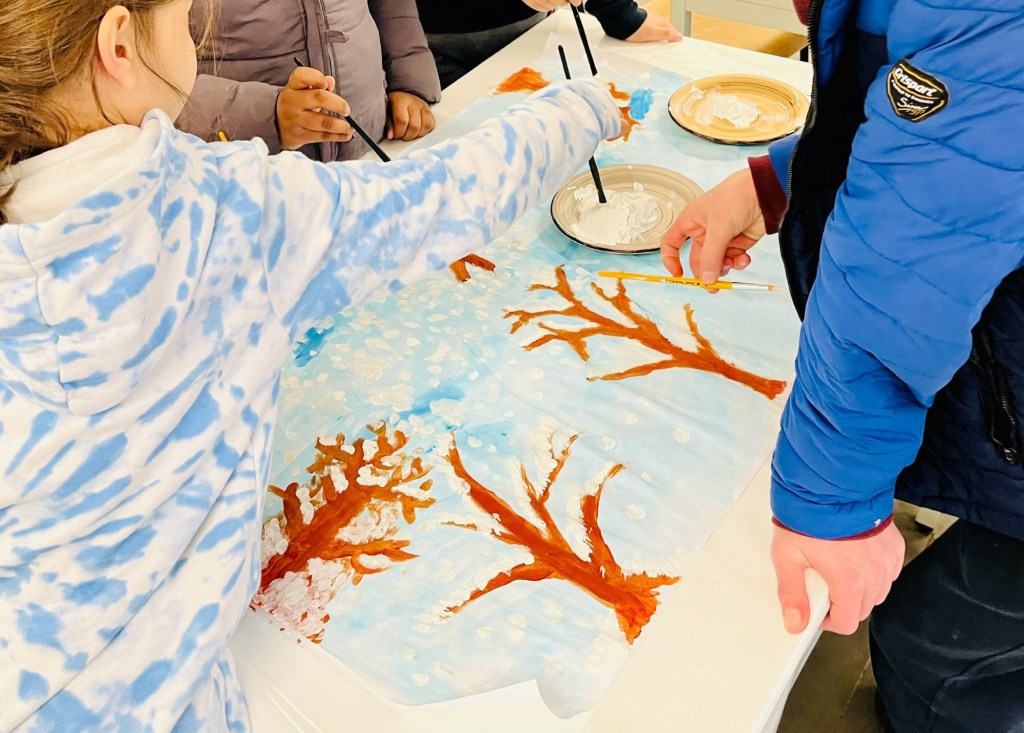
Through this lesson, the children have learned to control the thickness of the paint themselves, understanding that the sky is Transparent (transparent), the trees are Pastos (thick), and the snow is Deckend (opaque).


 Creativity Beyond Borders
コメントを残す